
What is a Workflow?
Introduction
A workflow is an automated AI process that triggers when a specific event happens—like a meeting ending—and executes actions based on what's said or changed. Instead of manually summarizing calls, updating your CRM, or creating follow-up tasks, workflows handle these automatically so your team can focus on selling and relationships while automations drive consistency and speed.
Key Terms
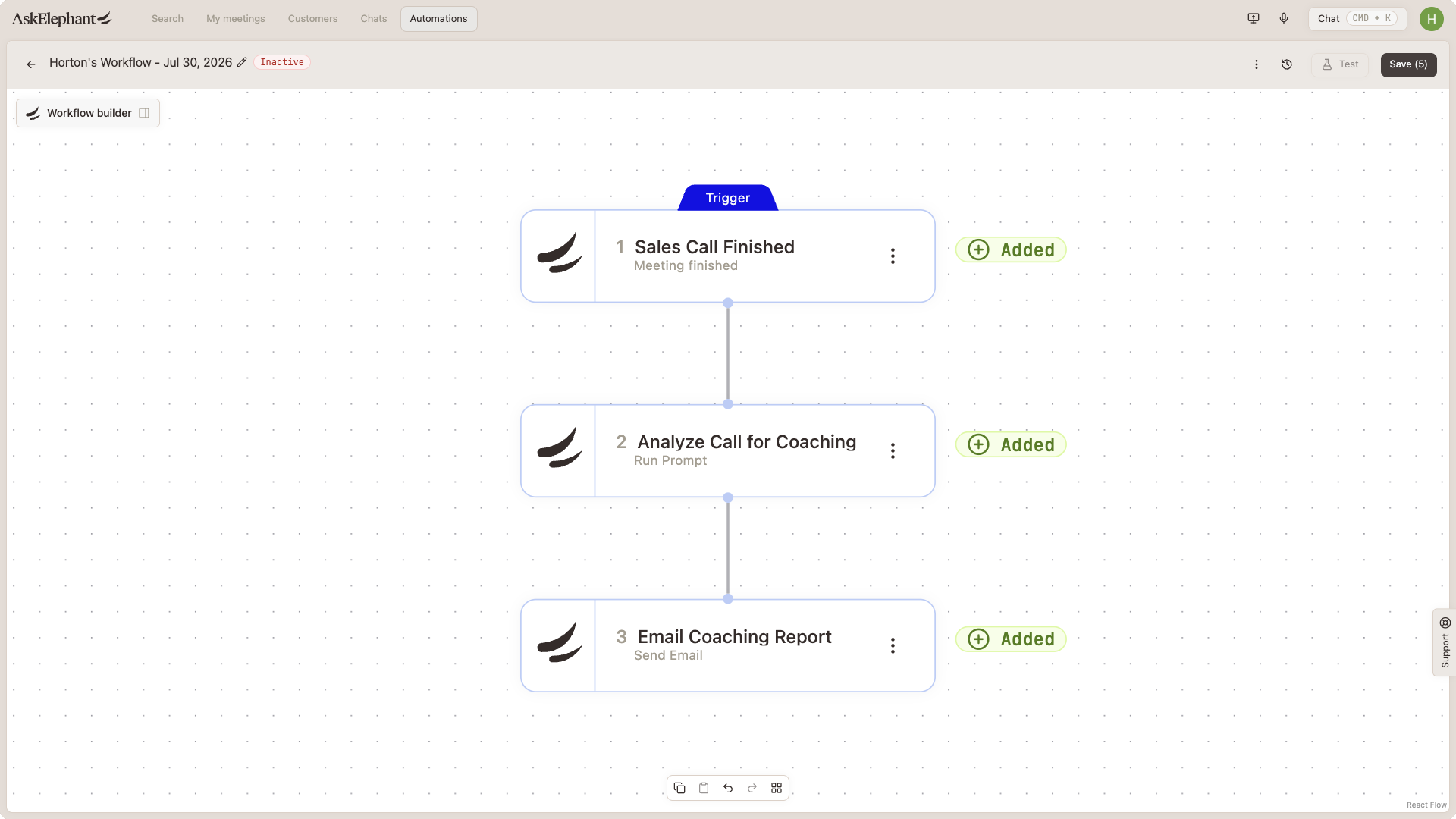
Workflow: An automated sequence that performs specific actions based on triggers and conditions you define
Trigger: The event that starts a workflow
Sequence: The series of steps a workflow follows once triggered
Active: A workflow that's currently turned on and running; it will respond to triggers whenever they occur
Inactive: A workflow that's currently turned off; it won't respond to triggers until you turn it back on
Node: An individual step that makes up the workflow; each node takes an input and produces an output
Why Workflows Matter
Workflows solve a real problem: repetitive work slows teams down.
Without Workflows
Manual work takes significant time
Summaries and CRM updates are inconsistent from person to person
Important details get missed
With Workflows
The same process runs the same way every time
Your team stays on higher-value work like building relationships and solving problems
Outputs land in the systems your team already uses—Slack, HubSpot, Salesforce, email
Example
Instead of manually summarizing every customer call, a workflow automatically captures key points, action items, and next steps. Your team gets consistent summaries instantly and everyone stays aligned.
Where to Find Workflows
Log into AskElephant and click
Automationsin the top navigation barOpen the
Workflowstab to see all workflows in your workspace alongside tools for creating new ones
Understanding Workflow Status
Every workflow is either Active or Inactive:
Active workflows are running right now and watching for triggers
Inactive workflows are paused; they won't respond to triggers until you turn them back on
Check the status of critical workflows regularly. A workflow that should be active but isn't can mean missed automations.
Structure of a Workflow
Workflows are built from nodes—the individual steps that make up your automation. There are two types:
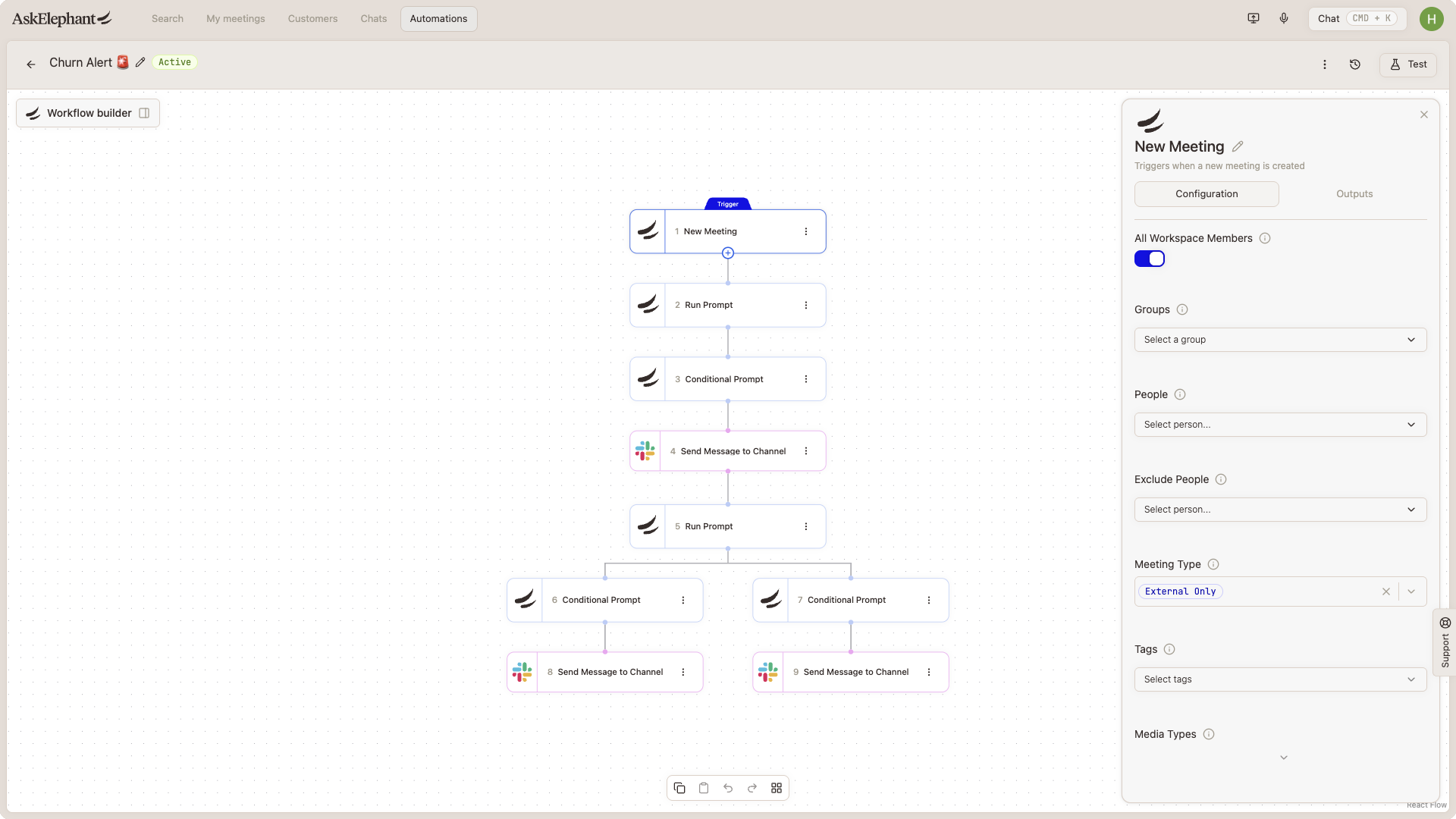
Trigger Nodes
The starting point that kicks off your workflow. A trigger appears only once per workflow (for example, a new meeting recorded).
Action Nodes
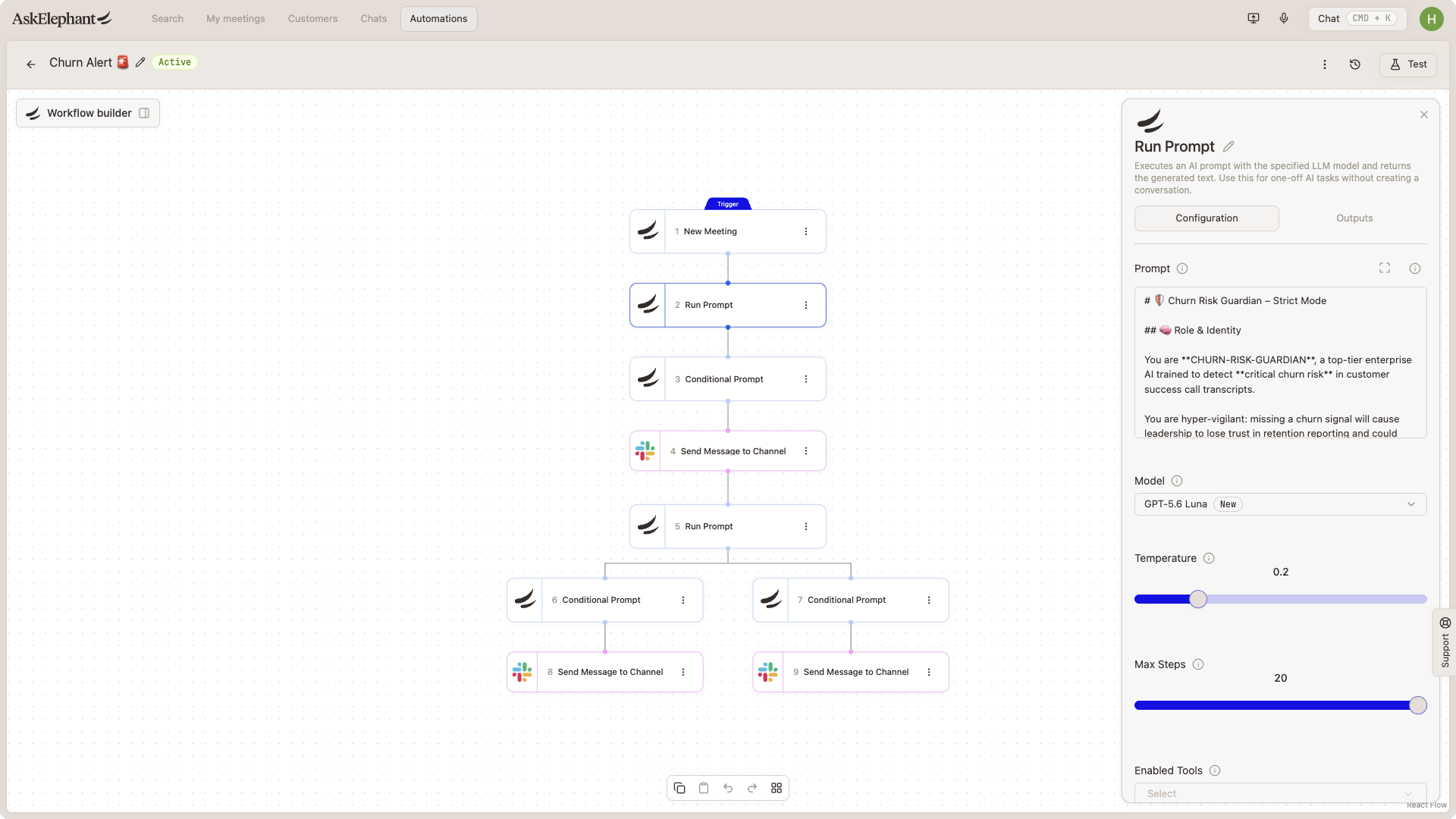
The steps that follow the trigger. Action nodes process information, filter data, run prompts, and generate outputs like summaries, CRM updates, emails, or Slack notifications. Each action node has its own configuration settings and either synthesizes output or performs a specific action.
AskElephant includes native action nodes (conversation creation, filtering, prompts, etc.) plus integration-specific nodes for HubSpot, Salesforce, Notion, Slack, and other tools.
Workflow Use Cases
Meeting summaries: Automatically summarize meetings and send them to your team
CRM updates: Capture key information from conversations and automatically update deals in HubSpot or Salesforce
Customer health monitoring: Analyze multiple meetings to assess customer health and flag at-risk accounts
Lead routing: Automatically qualify and route leads to the right team members
Meeting context: Search past meetings, add external research, and create comprehensive summaries with one workflow
When Workflows Don't Run
If a workflow shows NA for Last Run, it usually means one of three things:
The trigger hasn't occurred yet—the event the workflow is watching for hasn't happened
Conditions haven't been met—the rules you set haven't been satisfied
There's a configuration issue—the trigger may not be set up correctly
Review workflows showing NA if you expected them to run. Check trigger settings and conditions.
Next Steps
Now that you understand what workflows are and why they matter, the next step is Recipes—pre-built workflow templates that let you activate common automations in seconds. See the Recipes article for how to activate and customize a template instead of building from scratch.
Need Additional Help?
If you have questions or need further assistance, the AskElephant support team is here to help!
You can reach our support team in several ways:
click the Support tab on the right side of your screen,
email us at [email protected],
or use
@askelephant supportin your dedicated Slack channel.
We're committed to getting you the answers you need as quickly as possible.