
Tools, Agents, Workflows, & More
Introduction
AskElephant's core offering is automated AI workflows — automations that trigger when a meeting ends and do something useful based on what was said. Workflows use AI agents to connect to your CRM and project tools, and prompts to tell them exactly what to do. Together they turn conversations into consistent, repeatable outcomes.
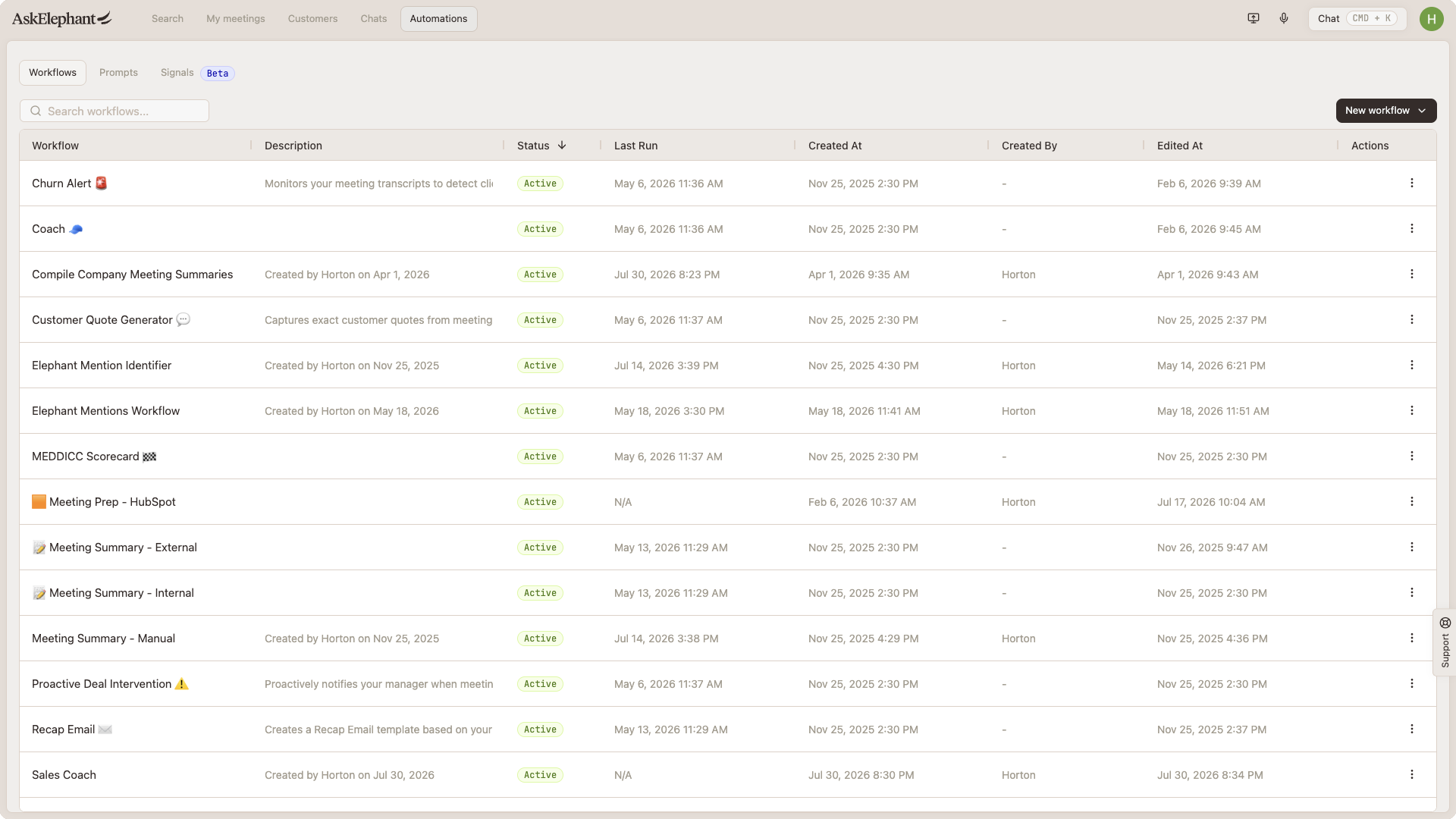
Tools: More Context on Demand
Tools are built-in features available wherever you chat in AskElephant — in meetings, on contact and company pages, and in Search.
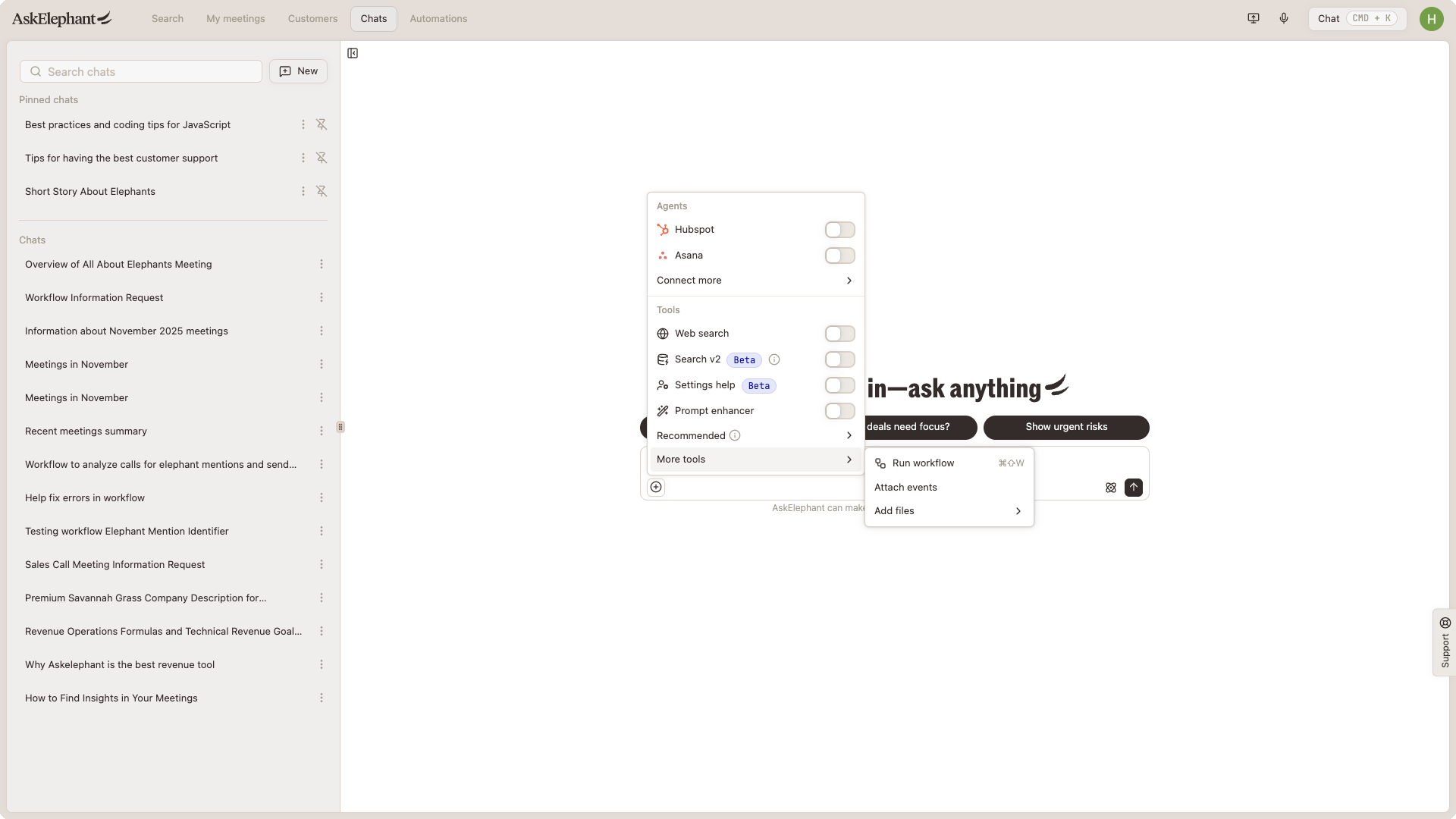
Web search — pull information from LinkedIn profiles, company websites, or recent news. Good for researching a prospect before a call or checking current details on a company.
Internal search — search across your past meetings to find relevant context. See what your team has discussed with a customer, or find similar deals.
Both run in the background to give your AI assistant richer context, so summaries and insights are sharper.
Agents: Connect Your Systems
Agents connect AskElephant to the platforms your team already uses: Salesforce, HubSpot, Monday, Linear, Asana, and Notion.
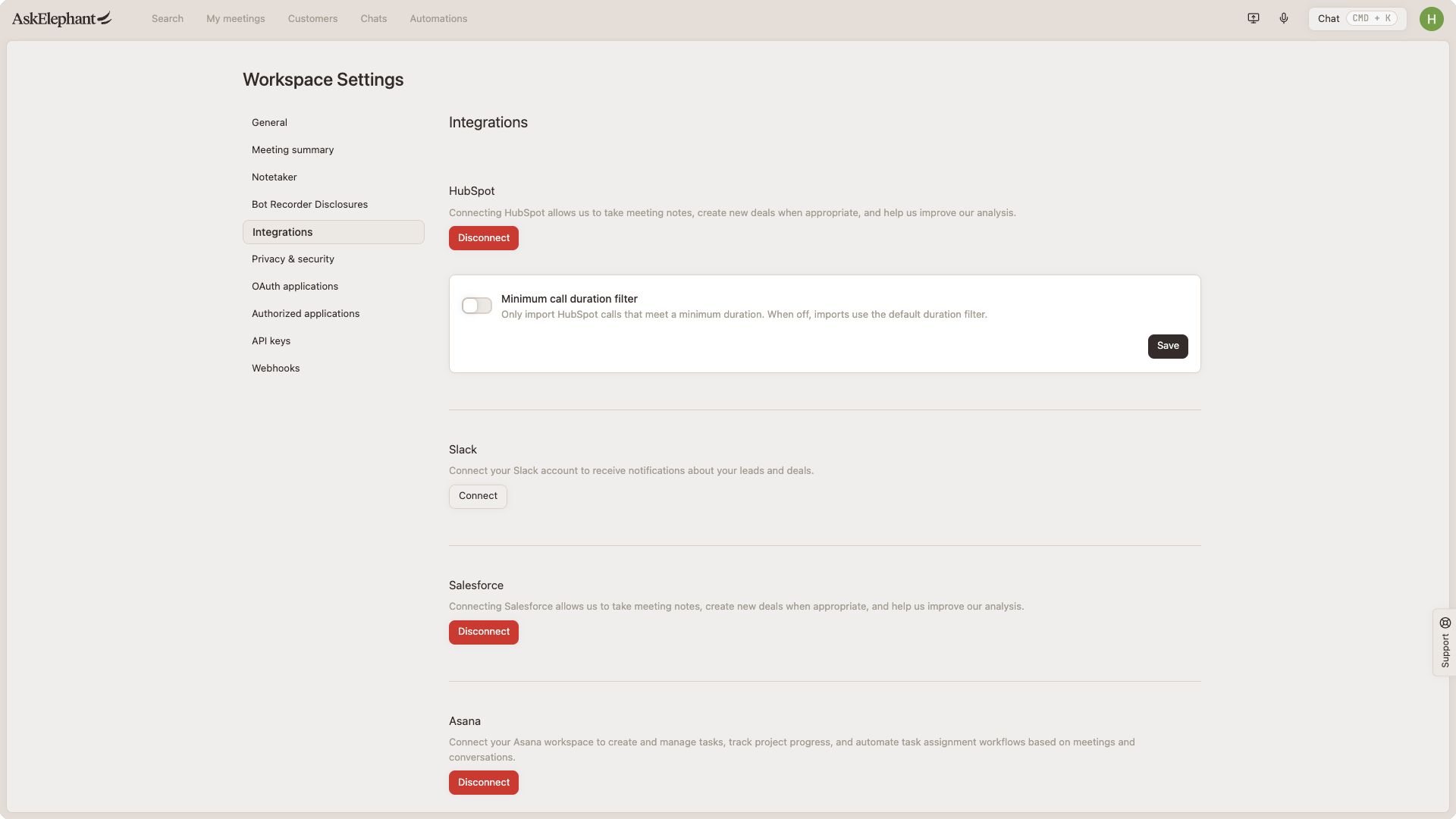
What agents do:
Pull information — retrieve deal details, task lists, or customer history from your CRM or project tool.
Create and update records — generate new opportunities, update deal stages, or mark tasks complete, all from inside AskElephant.
Bring relevant data into the conversation — context you wouldn't normally have when running summaries or prepping for meetings.
Common uses:
Pull the most relevant deals or opportunities before a customer meeting.
Check what tasks your team is working on for a specific account.
Verify documentation is current before pitching a new feature.
Workflows: Set It and Forget It
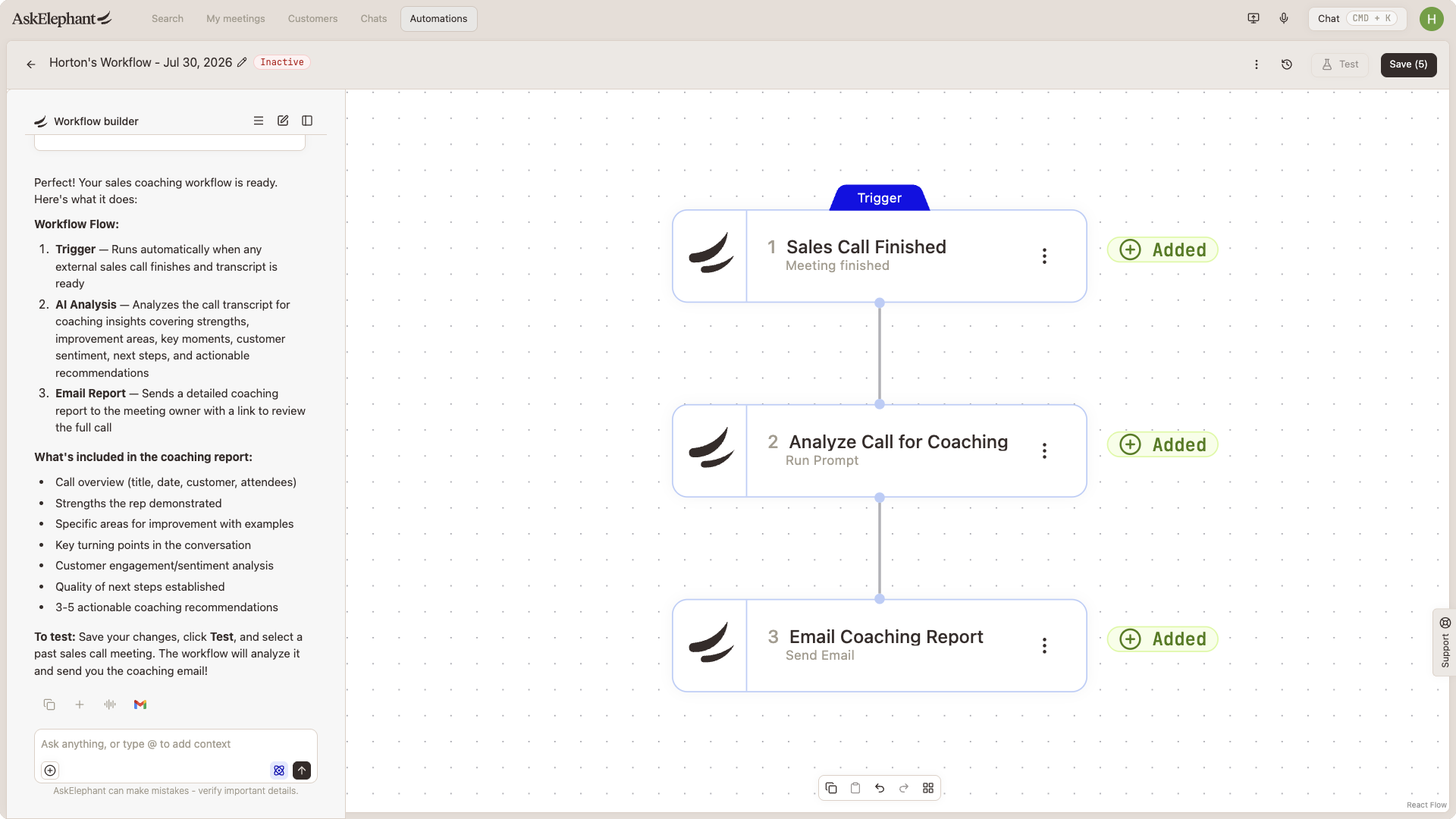
Workflows run on their own, triggered by specific events.
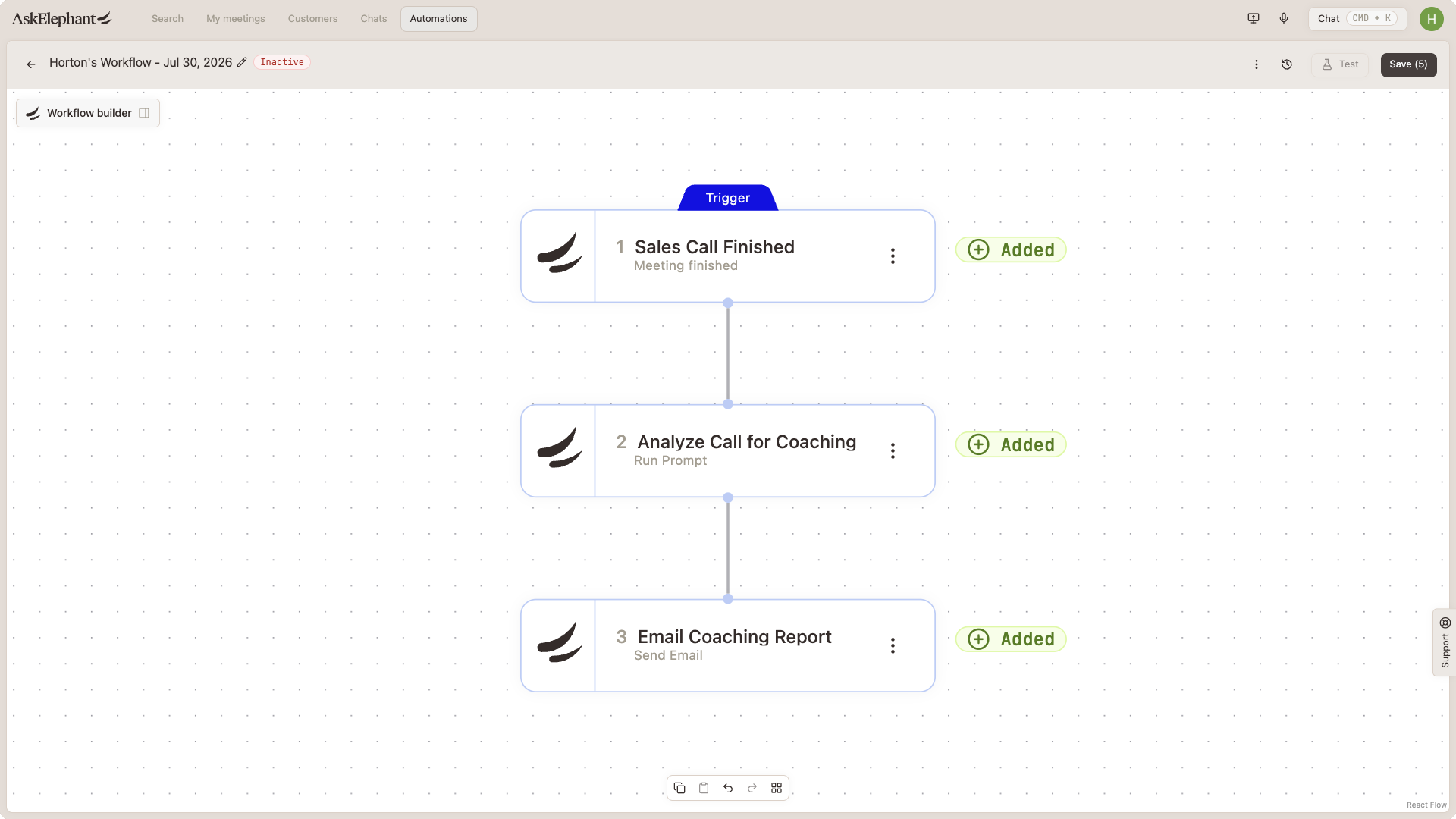
How Workflows Work
You define a trigger — for example, a new meeting being added or a deal being updated.
The workflow runs automatically when the trigger fires.
It performs the steps you've configured — gathering info, creating summaries, alerting the team.
Examples
Meeting prep — pulls recent LinkedIn information about a prospect, summarizes past meetings, and lists action items from the last conversation.
Sales-to-CS handoff — when a deal closes, compiles all meetings and documents, generates a summary of pain points and priorities, and hands it to the CS team.
Churn alerts — watches for mentions of frustration or price concerns on calls and alerts you immediately.
Prompt Library: Reuse Your Best Questions
The prompt library sits between manual work and full automation. Save the questions you ask regularly and pull them up whenever you need them.
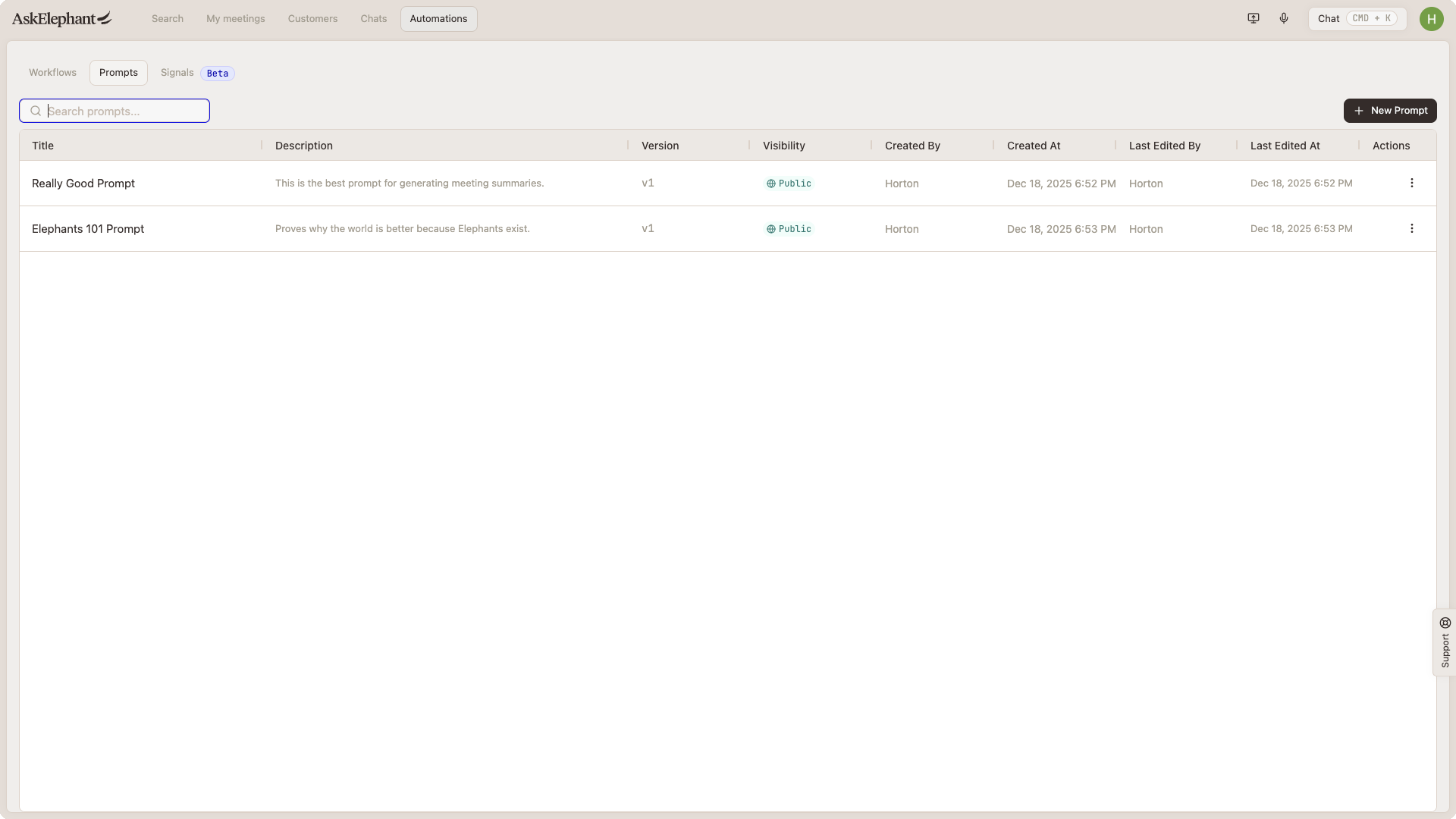
Why it helps:
Consistency — ask the same question the same way every time.
Speed — no retyping; one click and the prompt is ready.
Control — you still review the output before acting, so sensitive decisions stay in human hands.
Press / in any Chat to open the prompt library.
Signals: Your First Line of Defense
Signals are AI monitors that watch meetings for specific things you care about. When they detect what you've asked them to watch for, they notify you.
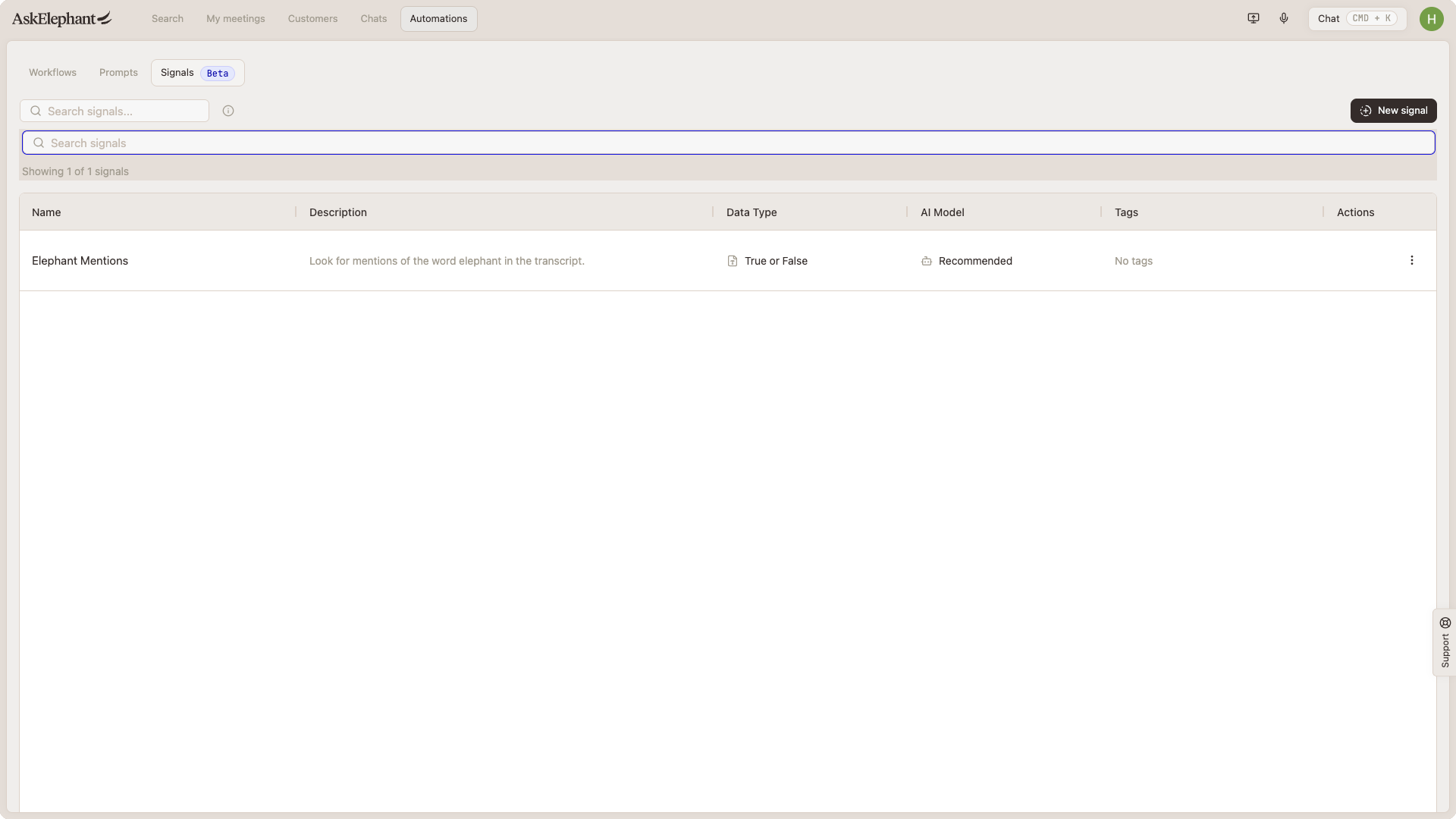
Examples of what to watch for:
A prospect mentioning a competitor.
A customer expressing frustration.
Discussion of a specific feature or budget.
Anything else you want to track.
Putting It Together
Tools, agents, workflows, the prompt library, and signals work as a system. Used together, they turn raw meeting data into summaries, insights, and alerts that reach the right person at the right time — so your team can focus on relationships instead of hunting for context.
Next Steps
Check which tools and agents your team uses most.
Pick one repetitive task that could be a workflow.
Save one prompt in the prompt library.
Set up one signal.
Need a walkthrough? Your customer success manager can help you prioritize and set up your first workflow. Reach out via the in-app chat.
Need More Help?
Reach the AskElephant support team by:
clicking the Support tab on the right side of your screen,
emailing [email protected],
or using
@askelephant supportin your dedicated Slack channel.